|
Issued: 02.06.2026
The 28th regime corporate legal framework, which the Commission has also branded "EU Inc.", is a proposed pan-European corporate form for innovative companies operating across borders. Procedure 2026/0074(COD), Commission proposal COM(2026) 321 of 18 March 2026.
In the last week of May 2026, the proposal produced three things it had been missing: a public country-by-country picture of where Member States actually sit, the EU-INC community's full published position on what the final text should deliver, and a public Parliament voice on the political calendar. This issue covers the country groupings, what the campaign just put on the table, the Cyprus-to-Ireland handover, and where Parliament now sits.
Council Working Party on Company Law Session 6 starts this morning. That is the timing; the substance below is the reason it matters.
|
|
How the room broke down
|
|
On 28 May, twenty-six delegations spoke at COMPET, the Competitiveness Council that brings together Member State ministers for industry, single market, and research. All twenty-six expressed broad support for the 28th regime concept. None opposed it outright. The fractures emerged on specific provisions. I read the full afternoon recording, and the room fell into three patterns; some delegations sit in more than one.
The first wants the proposal to land at maximum ambition (digital-by-default, harmonised across the Single Market, low cost): Portugal, Spain, Italy, Poland, Estonia, Lithuania, Czechia, Ireland, Latvia, Sweden, Belgium.
The second backs the proposal but treats safeguards as the price of progress (anti-money-laundering, fraud prevention, creditor protection, codetermination, legal certainty): Germany, France, Netherlands, Luxembourg, Austria, Finland, Croatia, Greece, Slovenia, Slovakia, Hungary, Romania. The Benelux trio circulated a joint non-paper.
The third pushes to narrow the proposal's scope, especially around insolvency, taxation, and minimum capital: Austria called for deletion of Chapter 10 (the simplified insolvency procedure for innovative startups inside the regulation). Bulgaria called the zero-capital approach "unacceptable" and asked to exclude both insolvency and tax. France wants tax and social matters out of scope. Sweden opposed direct-tax harmonisation. Finland flagged Chapter 10 specifically.
Three lines from the room are worth marking. France named a different number than the Commission did: fifteen days for incorporation (extendable), against the 48 hours in the proposal, framed as fraud protection. Austria called for a written Council Legal Service opinion on Article 114 TFEU, the EU treaty article on internal-market harmonisation that the Commission used as the legal basis for the regulation (it allows qualified-majority voting in the Council rather than unanimity). Romania flagged "serious reservations" on the simplified insolvency chapter. The safeguards conversation is no longer abstract.
|
|
|
|
What the campaign published
|
|
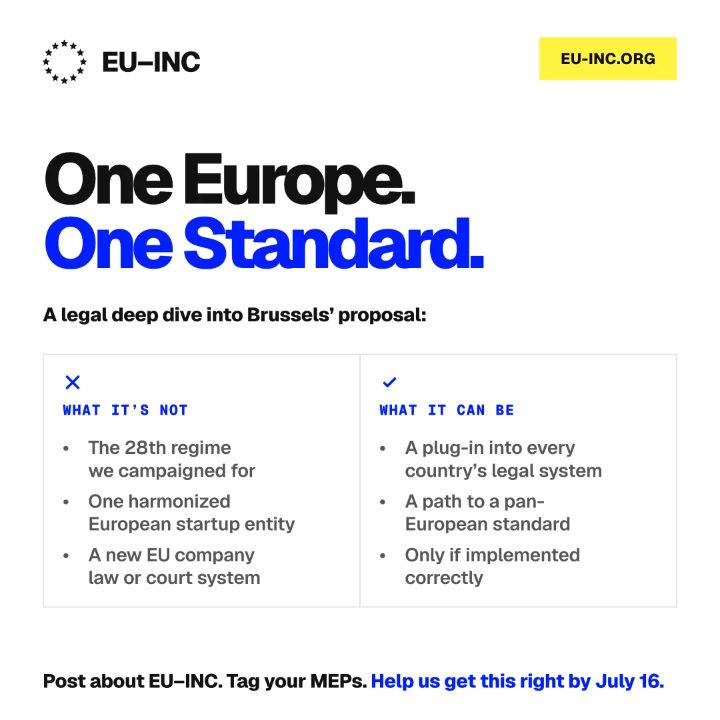
The EU-INC community, the petition group of roughly 24,000 founders, operators, and investors that originally called for this form, published its full position paper in the last week of May 2026. Legal review came from Dentons, Bird & Bird, and Orrick, with an academic consortium covering the insolvency chapter. It is the demand-side baseline going into the Parliament and Council negotiation.
The architecture they are fighting for has four pillars. Free choice of registered office (the company's legal home), codified into binding non-discrimination so a host Member State cannot block, restrict, or condition market access on where the company is registered. An EU-level digital registry connected to BRIS, the Business Registers Interconnection System that links national company registers across the EU, replacing 27 separate national filings with one. Labour, codetermination (the right of workers to be represented on the company board, strongest in Germany), and taxation continuing to follow the worker and the place of work, not the registered office. And no operational link from headcount, revenue, or activity to where the entity is registered.
Underneath that architecture sit the concrete asks for founders: incorporation in 48 hours, under €100, fully online, with no mandatory notary step when using the EU template articles of association, and zero minimum capital (with creditor protection delivered through a balance-sheet and 12-month solvency test signed by directors, rather than through a capital floor).
The community's bottom line is sharp. The headline test for the final text is the "register once, operate everywhere" promise. If non-discrimination survives in the operative provisions, the 28th regime produces one European corporate-law standard that founders converge on by choice. If non-discrimination is watered down, the proposal becomes 27 new national variants, delivers no real convergence, and founders keep defaulting to Delaware. That sentence is the lens to read every Council and Parliament amendment against.
|
|
|
|
Cyprus to Ireland
|
|
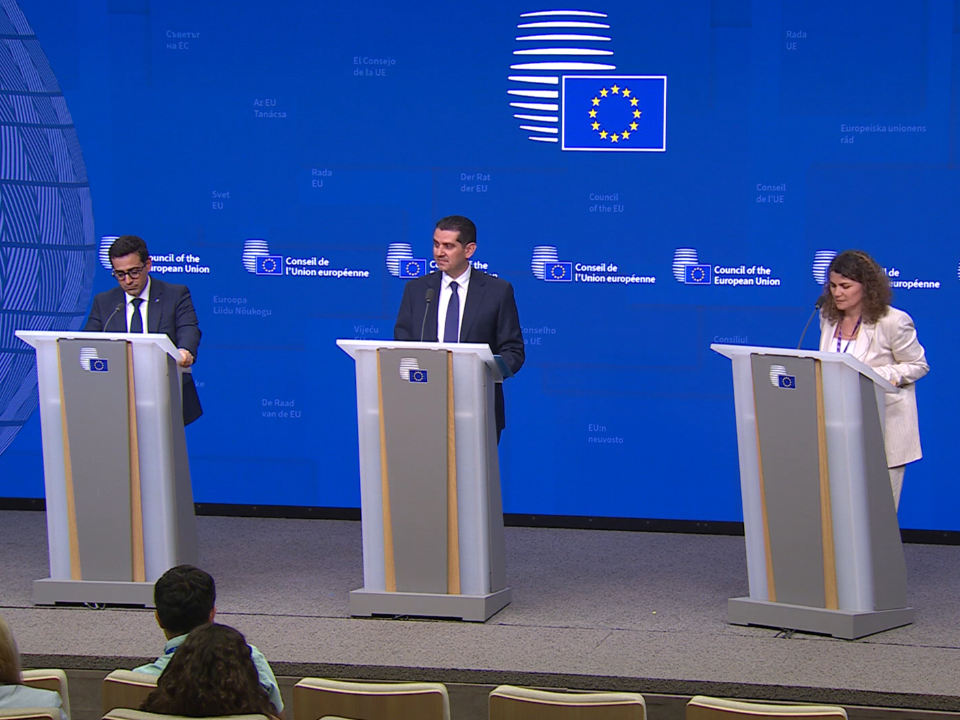
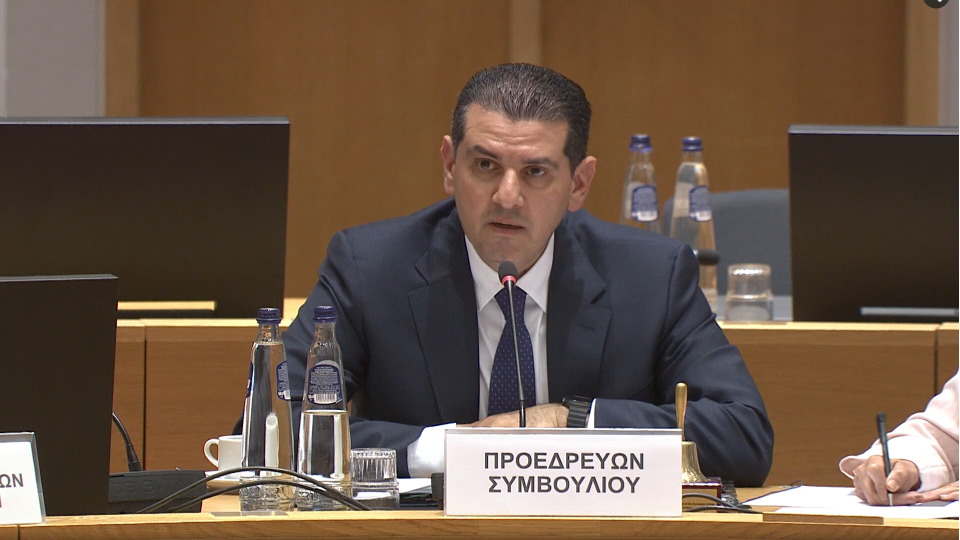
Cyprus Presidency chair Michael Damianos used the COMPET press conference to land the political line of the day:
"Today's discussion underlined that competitiveness and trust must go hand in hand, highlighting the need for a balanced framework with strong safeguards on transparency, workers' rights, anti-fraud measures, and legal certainty."
He told the room they will "pass the torch" to the incoming Irish Presidency on 1 July, that the Working Party on Company Law is "finalising the first reading" of the text under the Cyprus mandate, and that Ireland "will continue the intensive work on this file". Cyprus is trying to lock in the technical first reading before the handover, alongside the political signal that ministers want this advanced. Ireland inherits the safeguards conversation Cyprus opened, the Parliament calendar in the table below, and a growing wave of legal commentary arguing the Commission picked the wrong treaty article in Article 114 TFEU.
|
|
|
|
JURI rapporteur named: Rene Repasi
|
|
The MEP who will write Parliament's position on the 28th regime is now formally confirmed. Rene Repasi is a German MEP from the Socialists and Democrats (S&D) group, sitting in JURI (the European Parliament's Committee on Legal Affairs, the lead committee for company law). As lead rapporteur, he writes Parliament's draft report and leads Parliament's side of the trilogue (the closed-door negotiation with the Council and the Commission where the final compromise is shaped).
Repasi has been on this file for over a year. He was the rapporteur on Parliament's January 2026 own-initiative resolution on the 28th regime, and the positions he set out there, including his April 2026 EESC intervention, are the clearest guide to what his JURI draft is likely to contain. Three substantive lines worth tracking.
On the legal basis. Repasi wanted Articles 50 + 114 TFEU together, structured as a Maximum Harmonization Directive, not a Regulation on Article 114 alone. He calls the Commission's choice "new land in European Union law, and therefore risky", and predicts a future Court of Justice challenge on validity. He has been clear he will not spend political capital trying to reverse the legal-basis choice; he will use it as leverage on substance.
On collective labour rights and the registered seat. Repasi rejects the unity-of-seat principle (one country, one law for everything). He pushes a "split seat" model: corporate law follows the registered office, but collective labour rights, codetermination, and worker representation follow the place of work. He has also backed a Franco-German proposal under which a 28th regime entity that crosses 500 employees in a host Member State would be required to set up a subsidiary there, triggering domestic codetermination rules.
On abuse and letterbox companies. Repasi warned at the April EESC conference that an abuse-prone EU Inc. would "destroy the label EU Inc forever before the first innovation on the basis of this label is actually creating a success story". His reference point is the 2005 wave of UK Limited companies that flooded Germany on a £1-minimum-capital model and collapsed in insolvencies within months. To prevent a repeat, he will push for "genuine link" rules so that an EU Inc. registered in one Member State but operating only in another is not recognised as such.
This is the report he is writing for 26 June. Workers' rights and the legal-basis pressure are where he intends to spend his political capital.
Renew Europe shadow rapporteur Pascal Canfin (the centrist-liberal group's MEP on the file) sketched the path beyond JURI in a public LinkedIn event the same week: a Council general approach also targeted for September, one to two months of trilogue, final text by December 2026, regime usable from early 2027. He flagged banking and IBAN gold-plating (national banks layering extra compliance checks on top of EU-level rules so that an IBAN already validated in one Member State is still treated as foreign in another) as a new amendment topic he intends to push alongside Repasi's draft.
|
|
Next dates
|
| 2 June 2026 |
Working Party on Company Law, Session 6 (today) |
| 17 June 2026 |
Working Party on Company Law, Session 7 |
| 26 June 2026 |
Rene Repasi presents his draft report in JURI (first published Parliament text on this proposal) |
| 1 July 2026 |
Cyprus to Ireland Presidency handover |
| 15–16 July 2026 |
JURI consideration of draft report |
| 17 July 2026 |
JURI amendment deadline (shadow rapporteurs and any JURI member); same-day deadline for ECON and EMPL opinion committees |
| 7 September 2026 |
JURI consideration of amendments |
| September 2026 (tbc) |
JURI vote in committee on Parliament's negotiating mandate |
| Plenary vote (tbc) |
EP plenary vote on the mandate (slot not yet confirmed) |
The post-COMPET timeline is updated on the progress page.
|
|
Sources
|
|
|
|
We will keep tracking the June Council sessions, Repasi's first JURI text on 26 June, and the handover from Cyprus to Ireland. When the file moves, we will keep turning it into something readable and usable, so founders, operators, legal advisers, investors, and lawmakers can see what counts as real progress and what is still unresolved.
One small thing that helps: if you have 30 seconds, tell us who you are and what you follow most closely, so we can tailor what we send. Your answers shape what we prioritise next.
If this work is useful, please share the newsletter and the28thregime.eu with other founders, startup operators, legal advisers, investors, policymakers, and lawmakers who need a clearer view of where the 28th regime stands and where it is actually moving. If you are part of or advising a founding team, there is also a free founder readiness checklist on the site covering what to prepare now.
Thanks for reading, and thanks for the support.
|
|