The EU Commission has published the 28th-regime proposal


The EU Commission has published the 28th-regime proposal

The EU Commission has published the 28th-regime proposal


In brief

  • The Commission has now presented the EU Inc. proposal together with the wider 28th-regime package: a Communication, the draft corporate framework, an annex, a factsheet, and the impact-assessment papers. That makes 18 March the shift from signals and positioning to actual legal text.
  • The core offer is an optional EU-wide company framework built around faster and cheaper digital incorporation, a harmonised corporate rulebook, simpler cross-border operation, digital insolvency, and an EU-level stock-option approach designed to make startups and scaleups easier to build and finance inside Europe.
  • Nothing is decided yet. The proposal now moves to the European Parliament and the Council, with the next political checkpoint coming immediately at the European Council on 19–20 March 2026, where leaders are expected to discuss competitiveness and a “One Europe, One Market” agenda. We will track that and then follow with a closer reading of what is actually in the text.


Next happens:

  • 19–20 March 2026: European Council meeting (the “March Council”). Leaders are expected to discuss competitiveness and the single market, in the wider “one Europe, one market” frame.


  • Later this spring: the Commission is expected to publish draft merger-guidelines material for consultation, as mentioned in today’s press conference. This is separate from the EU Inc. file, but part of the wider competitiveness backdrop around scale, investment and market structure.

What matters


For weeks, the question was whether the Commission would deliver EU Inc. before the March Council. Today, that question was answered. The proposal is now out, together with the wider 28th-regime Communication, annex, factsheet, and impact assessment package. That makes 18 March the real shift from expectation to text.
The discussion can now move away from timing and toward substance: what the proposal actually creates, what is still missing, and how much of the Commission’s broader 28th-regime vision will survive Parliament and Council.


The substance is ambitious enough to matter. The Commission is proposing EU Inc. as an optional EU-wide company framework, alongside national forms, with registration within 48 hours, a cost ceiling of €100, no minimum share capital, digital-by-default procedures across the company lifecycle, easier digital share transfers, fully digital insolvency, and a “once-only” logic for company data. It also links the proposal to a common optional stock-option framework with deferred taxation, which is one of the clearest signals that Brussels is trying to make EU Inc. usable not just for incorporation, but for hiring, financing, and scaling.


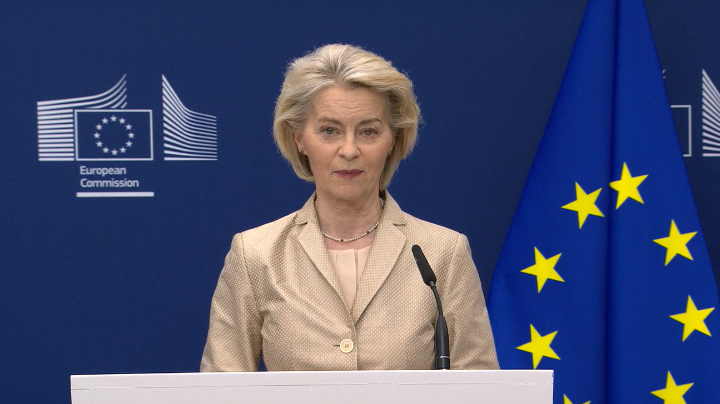
Ursula von der Leyen’s message was broader than a technical company-law update. She framed EU Inc. as an answer to fragmentation inside Europe, even arguing that barriers within the Union hurt more than tariffs from outside. Her emphasis was that this should make Europe easier to build in, not just easier to register in: one rulebook, one digital environment, one business register, better access to talent through stock options, and a less punishing failure path through digital insolvency. Just as importantly, she made a point of saying the proposal must respect existing labour and social standards, including board-level participation rights where those exist. The political frame was clear: this is being sold as “one Europe, one market” not as a niche startup perk.

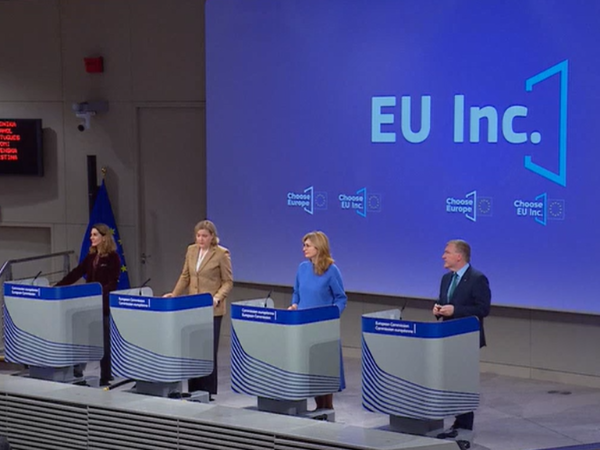
The three commissioners added useful colour. Henna Virkkunen positioned EU Inc. as the core of a broader 28th-regime push and used the phrase “smart regulation, not deregulation”, while also pointing to what comes around it: tax simplification later this year, the Fair Labour Mobility Package, possible movement on 100% cross-border telework for startups, and even merger-guidelines work with a draft later this spring and finalisation targeted by year-end. Michael McGrath pushed the founder-use angle hardest: too much friction, too much re-registration, too much complexity, and therefore a need for practical fixes that work in day-to-day company life, especially on stock options and winding down. Ekaterina Zaharieva stressed that the file was built from founder and startup pressure from the ground up, and that the new recommendation on definitions is meant to give future policy a more usable startup/scaleup vocabulary.

Q&A Session

The Q&A mattered because it showed where the political pressure points already are. The Commission’s answer was that this moment is different because the political will is now there, but also that EU Inc. is not supposed to rewrite labour law or become a tax-avoidance shortcut. McGrath explicitly said employee stock options are meant to complement wages, not replace them, and argued the tax point is simple: taxation should arise when shares are sold, not before value is actually realised. On tax avoidance, the Commission’s line was equally important: a company may choose where to register, but that does not automatically change where it is tax resident, which remains governed by national tax law. Zaharieva also defended the startup and scaleup definitions as broad, practical, and built from consultation, even if they will still be debated by the ecosystem.


March European Council Meeting

The next checkpoint now comes immediately. On 19 and 20 March, the European Council is expected to discuss competitiveness and the single market under a “One Europe, One Market” agenda, with strategic guidance and deadlines on market integration, simplification, industrial renewal, and investment. That means today’s proposal does not land in isolation; it lands inside a wider competitiveness push that could give it real momentum.


Upcomming newsletter

We will follow those briefings closely tomorrow and on the 20th.

We will also come back with a sharper follow-up after going through the actual proposal package in detail, because the next valuable step is no longer to ask whether EU Inc. is coming, but to show what the text really creates, what is still missing, and what may change on the road to adoption.


Official resources from today:


    We will track the Council briefings, go deeper into the proposal and supporting documents, and follow up with shorter focused newsletters on the legal text, the founder implications, and the wider 28th-regime path.


    If this work is useful, please share the newsletter and the website with other founders, startup operators, legal advisers, investors, and policymakers following the file.